Choosing a school
How to Choose a Play School in Panipat: A Parent's Checklist
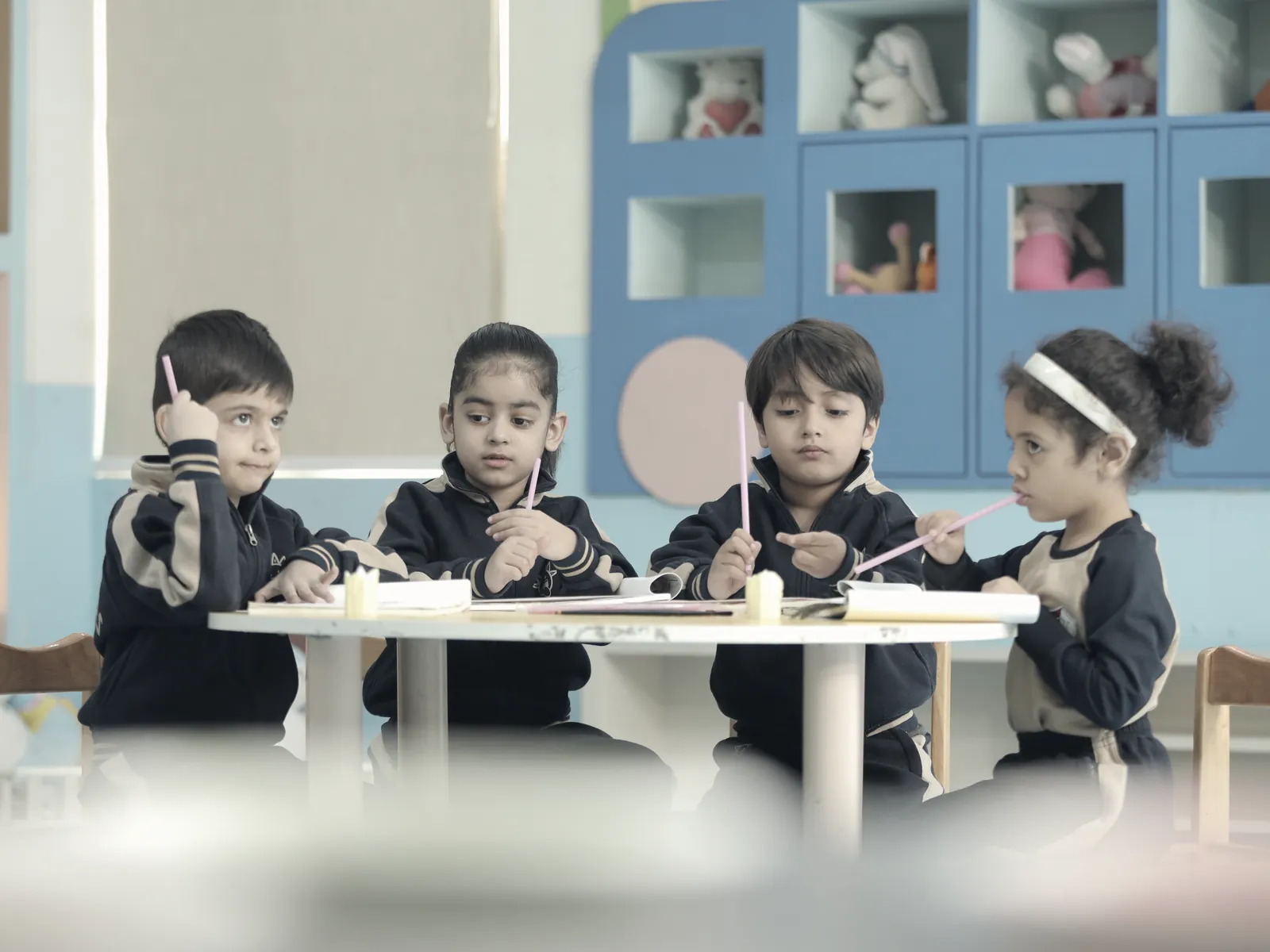
Most play school visits in Panipat follow the same script. A warm reception, a walk past freshly painted walls, a brochure with a great many photographs of children laughing, and a banner outside promising something like holistic development. None of that is dishonest, exactly. It is just not very useful for deciding anything.
Here is what is useful: nine things to actually look at, in the twenty minutes or so that a school visit gives you.
1. Watch a class in session, not a class staged for you
Ask to see an ordinary morning, not a demonstration. A real Early Years or EY1 room has some noise in it, some children not paying attention, and a teacher who is comfortable with both. A room that goes silent and performs the moment a visitor walks in tells you more about the visit than about the school.
2. Count the adults, not just the children
For two- and three-year-olds especially, the adult-to-child ratio matters more than the size of the building. Ask directly: how many teachers and helpers are in the room, and for how many children. A school that answers this without hesitation has almost certainly thought about it before.
3. Look at what is on the walls
Walls covered edge to edge in perfect, identical cutouts usually mean the teacher made the art and the learners coloured it in. Walls with uneven, obviously child-made work, with a child's own words written under it, usually mean the learners made choices. The second kind is a better sign for how a school actually works day to day.
4. Ask what happens when a child struggles
Every small child has a hard week. Ask what the school does when a learner will not settle, will not share, or will not stop crying at drop-off. A good answer is specific and calm. A vague answer about discipline, or no answer at all, is worth noting.
5. Ask about the day, hour by hour
Get the actual schedule, not the marketing description of it. How much of the day is free play, how much is structured, how much is outdoors, and how much is screen time, if any. Twenty minutes of outdoor time and two hours of worksheets is a different school than the brochure suggests.
6. Notice how staff talk to children who are not yours
You will pass other children in the corridor during a visit. Watch how the staff speak to them when nobody has arranged for you to be watching. This is difficult to fake and tells you a great deal.
7. Ask what changes at Early Years, EY1, EY2 and EY3
A school with a real curriculum can tell you, without checking a document, what a learner is doing differently at EY2 (ages four to five) compared with Early Years (ages two to three). If the answer is essentially "the same things, but older," ask what the school's plan actually is for that progression.
8. Ask a parent, not the school
If you can, speak to a family already enrolled, ideally one you found yourself rather than one the school introduced you to. A five-minute conversation at pick-up time is worth more than an hour of brochure.
9. Trust the visit over the reputation
A school's name in the neighbourhood, or how long the queue for admission is, tells you about its popularity. It does not tell you whether your particular two-year-old will be happy there on a Tuesday morning in February. Weigh what you actually saw more heavily than what you had heard.
The best play schools are not the ones with the best brochure. They are the ones where an ordinary Tuesday morning looks good.
None of this is a special insight; it is mostly common sense, applied deliberately instead of in a hurry. But a hurry is exactly the condition most parents are in when they visit a school, so it is worth writing down in advance what to actually look for.