Inside the classroom
What Actually Happens in an Early Years Classroom
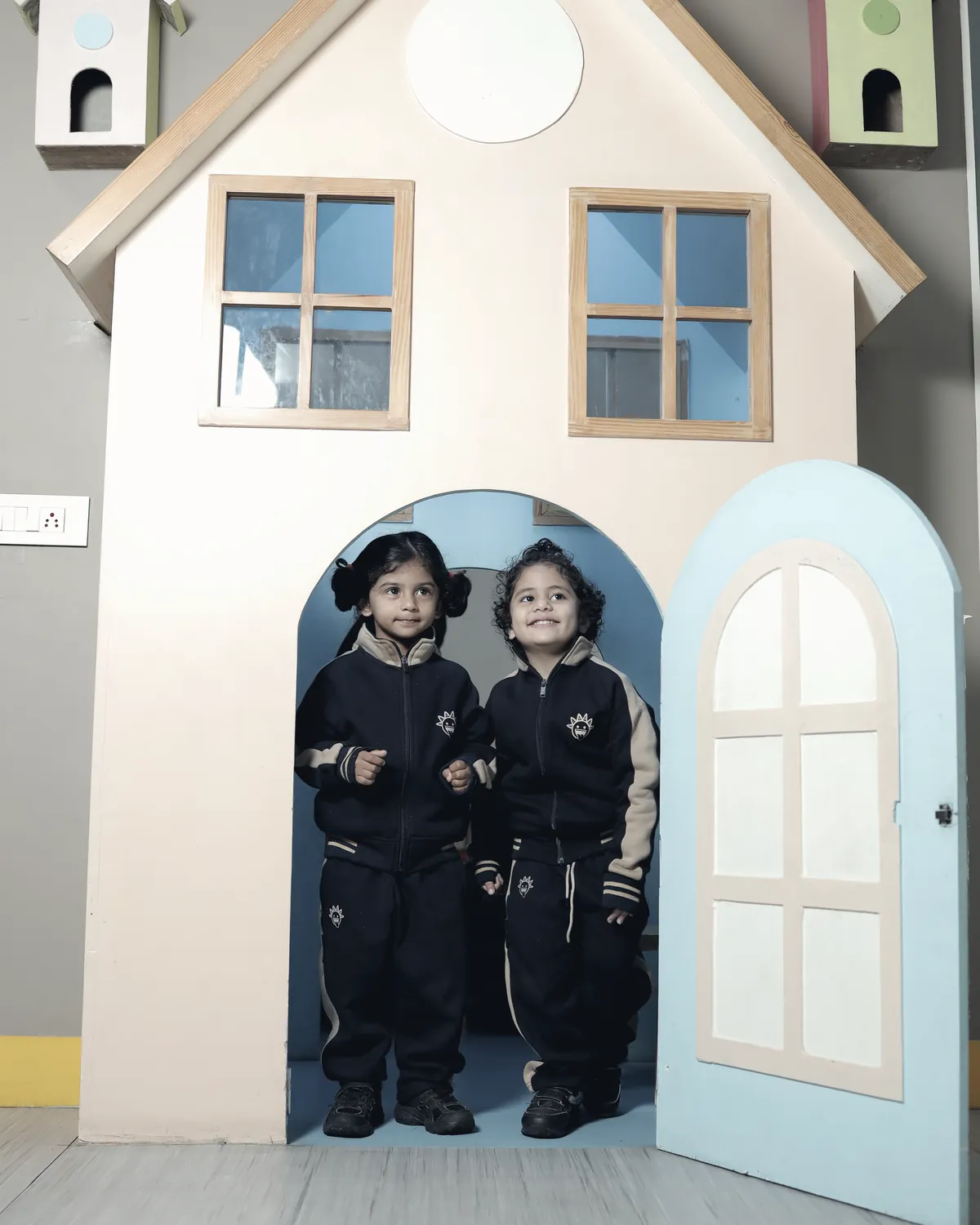
"Inquiry-based learning" is one of those phrases that appears on almost every school's website and explains almost nothing about what actually happens inside the classroom. It is easier to describe as a morning than as a method.
Nine, and a puddle
A learner named Nine (not her real name, but close enough) arrives one morning after it has rained, and announces that there is a puddle by the gate that "has a rainbow in it." The teacher does not correct her, and does not move straight to a lesson about light. Instead, the teacher asks the question a good early years classroom is built around: what do you notice about it?
By the end of the morning, four learners have gone back out with the teacher to look at the puddle again. They have noticed the rainbow only appears from one angle. They have tried to make their own puddle rainbow with a torch and a shallow tray of water, and mostly failed, which turns out to be more interesting to them than succeeding would have been. Nobody has been told the word "refraction," and nobody needs to be, yet.
The difference between activity and inquiry
A worksheet about rainbows would have taught the same seven-year-olds' worth of facts in less time. What it would not have done is show a four-year-old that a question she asked out loud was taken seriously enough to spend a whole morning on. That is the actual content of inquiry-based learning: not a set of activities, but a habit of treating a child's own curiosity as the starting point, rather than an interruption to the day's real plan.
This does not mean a classroom without structure. The teacher had a plan for that morning, and a set of materials ready in case a child's question needed them. What changed was the order: the child's noticing came first, and the teacher's planning served it, not the other way round.
What this looks like across the early years
The shape of a morning changes as learners get older, even if the underlying idea does not. In Early Years (ages two to three), an inquiry might last five minutes and never leave the sand tray. By EY2 (ages four to five), the same instinct can carry a small group of learners across an entire week, returning to a question after lunch, after a weekend, even after it seemed to be finished. By EY3 (ages five to six), learners begin to keep some record of their own thinking, in the words and drawings they can already manage, rather than relying entirely on an adult to remember what they found out.
Why it takes deliberate effort, not less effort
A common and reasonable worry from parents is that a classroom built around a child's own questions must be less rigorous than one built around a fixed curriculum. In practice it usually asks more of a teacher, not less: reading a room quickly enough to notice what a child has actually noticed, and having the materials, patience and plan ready to follow it somewhere worthwhile. A worksheet is easier to prepare than a puddle.
The content was never really about rainbows. It was about what happens when a small child's own question is taken seriously.
None of this needs a visitor's imagination to check. Ask, on a school visit, for one recent example of a question a child asked that changed what the class did that day. A school doing this well will have several such stories ready, without having to think hard for one.