Boards and curricula
Which Board Is Best: CBSE, ICSE or IB?
Ask ten Panipat parents which board is best and you will hear CBSE ten times. That is understandable: it is the board most schools here follow. But the question is better asked as: best for what? Here is a plain comparison, with a closer look at the IB, because it is the least understood of the three.
CBSE
The Central Board of Secondary Education follows a national curriculum, closely tied to NCERT textbooks. It is widely available, familiar to every school and tutor, and built around board exams in Classes 10 and 12 and the national entrance tests that follow. If your priority is a predictable, exam-structured path, it is a sound choice.
ICSE and ISC
The CISCE boards run a broader, more language-heavy syllabus with more written work. There are far fewer ICSE schools in and around Panipat, so for most families this is more a question of travel than of preference.
The IB (International Baccalaureate)
The IB is a continuum of programmes for learners from age three to nineteen. The Primary Years Programme covers the early and primary years, the Middle Years Programme covers ages eleven to sixteen, and the Diploma Programme covers the final two years. Its aim is less about covering a syllabus and more about teaching children how to learn: to ask questions, research, reason and explain what they think.
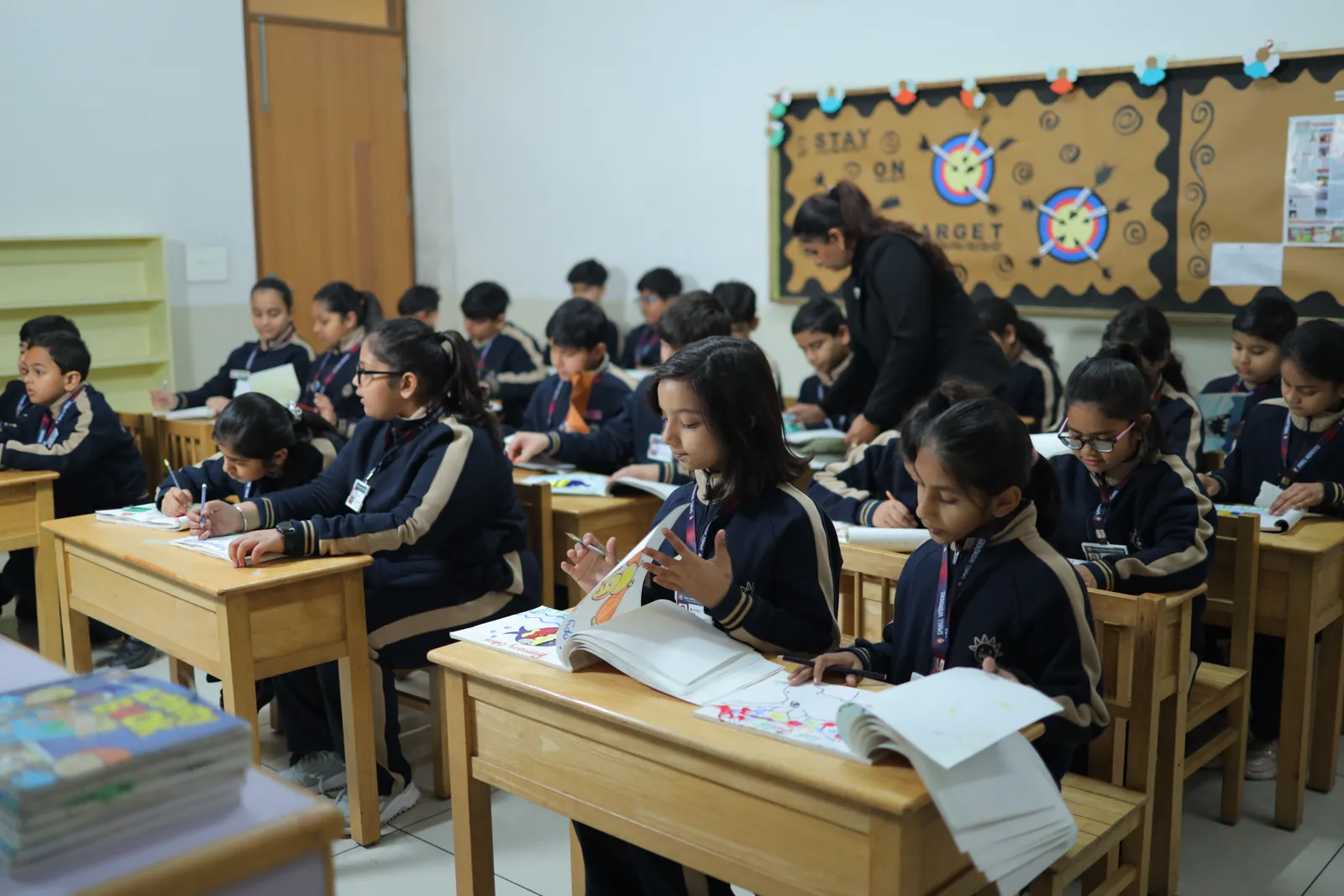
In practice, an IB classroom looks like this:
- Inquiry first. Learners start with a question and find out, rather than receiving an answer to copy.
- Connected subjects. A unit about water might draw on science, language, maths and art together, so ideas stick.
- Thinking, not only recall. Learners are assessed on explaining, applying and reflecting as well as on remembering.
- A global outlook. Many of the world’s leading schools teach the IB, and universities worldwide, the Ivy League among them, recognise the Diploma and value the habits behind it.
An IB school does not remove hard work. It changes what the hard work is for.
Which is best for your child?
CBSE suits families who want a standard national track, and it does that well. But if you picture your child as a curious, confident adult who can think independently, work with people from anywhere and keep learning long after the exams, the IB is the board built for exactly that. Families who look closely at both often find the question answers itself once they watch an IB classroom at work. Whichever you choose, the quality of the teachers and the culture of the classroom matter, and that is why we suggest seeing one in person.
The IB in Panipat
Infinia World School in TDI City is an IB World School, the only one within about 100 km of Panipat, teaching Early Years to Grade 8. For families who want the IB approach from the beginning, it also runs its own kindergarten. Small Wonders, which is run by the same family, builds its early years around the same habit of inquiry, so a child can start at either and arrive at the same way of learning. Read more in our ten reasons parents choose Infinia.
Please check each school's current programmes and authorisation with the school and with the IB directly at ibo.org before you decide.